4 Strategies to Boost Education Sales
NASP
Selling educational products is a complex area that requires the most thoughtful and innovative approach. Every year there are more and more such products. This means that competition is growing in the education sales market.
And the customer demand is growing. The so-called consumer turns into a prosumer.
This is an abbreviation for the phrase "professional consumer". Consumers are now becoming professionals.
Before making a decision to purchase a product or order a service, they study not only the commercial offer but the entire market segment for a long time.
Accordingly, the old marketing methods do not work. What should be the new instruments?
Step 1: We form a detailed portrait of the target audience
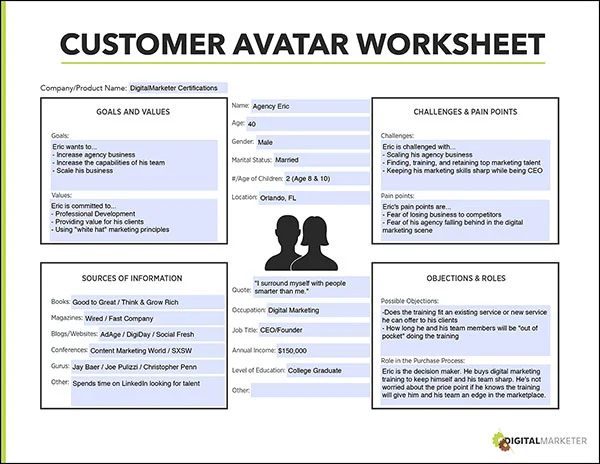
Who is your future client? Is it a teacher, a parent of a child or a self-taught person, a government agency, or a private company? Even at the stage of product management, it is important not only to make the educational product bright, informative, and interesting but also to understand what needs of the audience it satisfies. Because the product that closes the consumer's pain wins in the market. That is, it performs an important function for him. To know what products the audience has a request for, you need to understand the audience itself. To do this, create a consumer avatar. The more detailed you work it out, the more effective your marketing and sales will be. Fill out the template below and you will get a full-fledged consumer avatar. Remember, there may be several of them, depending on the specifics of your educational product.Step 2: Use a differentiated approach
This is true when you are already starting to form a unique selling proposition. It is important to realize that the client does not know the benefits of your educational product until you yourself tell him about them. What seems familiar and natural to you in your development, in fact, can be an important competitive advantage that distinguishes the product from competing analogs. Therefore, you should answer the following questions:- What is unique about your educational product?
- What problems does it solve for potential customers?
- How is it fundamentally different from competitors?
- What value for money do you offer your customers?
Step 3: Tailor your sales approach to individual customers
The field of education is very diverse. Therefore, you need to understand the features of the specific segment that your product is aimed at. Here you need to study factors such as:- the technological environment in which learning takes place;
- those devices and devices that in the complex constitute educational equipment;
- mode of study and time constraints of the teacher;
- requirements and standards that are put forward for curricula.
Step 4: Use target audience communication to promote the product
Let's say you propose a development that can make the life of teachers much easier. Representatives of this professional community are often very sociable since their work is connected with communication. And when they get a really good educational product, they are happy to share this information with colleagues. It's good when your marketing encourages this (for example, bonuses for referrals). Thus, you can invite educators who have already bought your product to become members of the affiliate program.Conclusion
In order for your educational product not to get lost among competing analogs, you need to have a good understanding of your audience and the environment where it lives and works. You must plan your sales carefully and not aim solely at fulfilling the plan. Caring about consumers, being willing to help, and considering their needs will help to achieve outstanding results. Use the strategies that we have described today to increase sales and gain customer loyalty.Share this article: